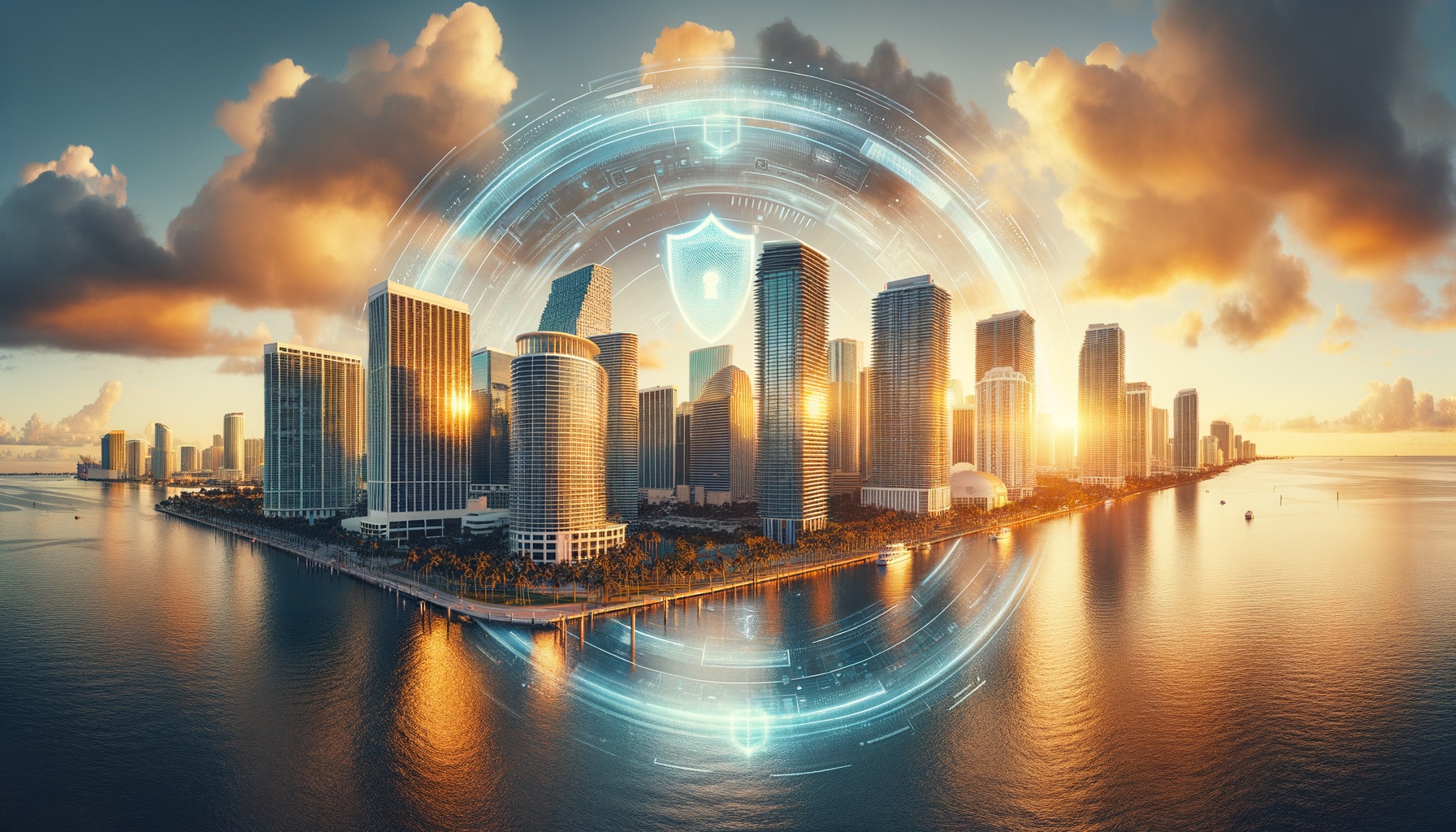
Miami is booming. Tech startups are pouring into Wynwood. Financial firms are expanding in Brickell. Healthcare systems are growing across Dade County. Logistics companies are handling record cargo through PortMiami. The city has never been more connected, more digital, or more dependent on technology.
That's exactly what makes it a target.
The Threat Landscape Has Changed
If you're running a business in Miami in 2026, the cybersecurity threats you face today look nothing like what they did even three years ago. Ransomware has evolved from opportunistic attacks into a professional industry, with criminal organizations running customer support lines and affiliate programs. Phishing attacks are now AI-generated, grammatically perfect, and personalized using data scraped from LinkedIn and social media. Business email compromise — where attackers impersonate executives to authorize fraudulent transfers — cost US businesses over $2.9 billion last year alone.
And Miami's unique position as an international business hub creates specific risks. Cross-border transactions, multilingual communications, and connections to Latin American and Caribbean markets create complexity that attackers exploit. If your business handles international wire transfers, you're a target. If you work in healthcare, you're a target. If you process credit card payments, you're a target. If you have employees with email addresses, you're a target.
Small and Mid-Size Businesses Are the Primary Victims
There's a dangerous myth that cybercriminals only go after large corporations. The data tells a different story. According to recent reports, 43% of cyberattacks target small businesses, and 60% of small businesses that suffer a significant breach close within six months.
Why? Because small and mid-size businesses often have the data criminals want — customer records, financial information, healthcare data — without the security infrastructure to protect it. They're low-hanging fruit, and attackers know it.
In Miami, this hits particularly hard. The city's economy is driven by small and mid-size businesses in healthcare, hospitality, real estate, logistics, and financial services — all industries that handle sensitive data and face strict regulatory requirements.
Compliance Is Getting Stricter
Speaking of regulations: the compliance landscape is tightening. Florida's data breach notification laws have expanded. Federal regulations around HIPAA, PCI-DSS, and CMMC continue to evolve. And increasingly, your clients and partners are asking about your security posture before signing contracts.
For Miami businesses, this creates a dual pressure. You need security to protect against real threats, and you need security to maintain compliance and win business. It's no longer a cost center — it's a competitive requirement.
The Rise of AI-Powered Attacks
2026 has brought a new dimension to cybersecurity: AI-powered attacks. Attackers are using artificial intelligence to generate convincing phishing emails, create deepfake audio for social engineering, and automate reconnaissance of target networks. The tools that were available only to nation-state actors three years ago are now accessible to anyone with a credit card and a criminal mindset.
This means traditional security measures — basic firewalls, simple email filters, annual security awareness training — are no longer sufficient. You need adaptive, intelligent defenses that can keep pace with adaptive, intelligent attacks.
What Miami Businesses Should Do Now
The good news: protecting your business doesn't require a Fortune 500 budget. It requires intention, expertise, and a realistic plan. Here's where to start:
Get a security assessment. You can't fix what you can't see. A professional assessment identifies your vulnerabilities, evaluates your risks, and gives you a prioritized action plan. Many cybersecurity firms — including ours — offer this as a free initial consultation.
Implement multi-factor authentication everywhere. MFA alone blocks over 99% of automated credential attacks. If you do nothing else on this list, do this.
Train your people. Your employees are your first line of defense and your biggest vulnerability. Regular, engaging security awareness training — not just an annual compliance checkbox — makes a measurable difference.
Get endpoint protection. Modern endpoint detection and response (EDR) platforms catch threats that traditional antivirus misses. If your "security" is still basic antivirus, you have a problem.
Have an incident response plan. Not if a breach happens — when. Know who to call, what to do in the first hour, and how to communicate with customers, regulators, and the media.
Consider AI-powered defenses. Fight fire with fire. AI agents that monitor, triage, and respond to security events can give your business enterprise-level protection without the enterprise-level staffing costs.
The Bottom Line
Miami is an incredible place to build a business. The energy, the connectivity, the access to international markets — it's unmatched. But the same things that make Miami attractive to entrepreneurs make it attractive to cybercriminals.
Cybersecurity isn't something you get around to eventually. In 2026, it's as fundamental as locking the front door. The businesses that recognize this — and act on it — will thrive. The ones that don't will learn the hard way.
Ready to protect your Miami business?
Thunder Tech Services provides cybersecurity assessments, managed security services, and AI agent deployment for Miami businesses.
Get Your Free Security Assessment →